
Palm Reading vs. the Lord of the Palms
by Dale Reeves
Story Pastor
A few years ago my wife and I ventured out west to enjoy several national parks, including the Grand Canyon, Petrified Forest, and the Painted Desert. While in the beautiful state of Arizona, we also took some time to explore Sedona, which is thought by many to be a place that has a lot of spiritual power. Among the many New Age stores in that town we observed several psychic reading and palm reading shops.
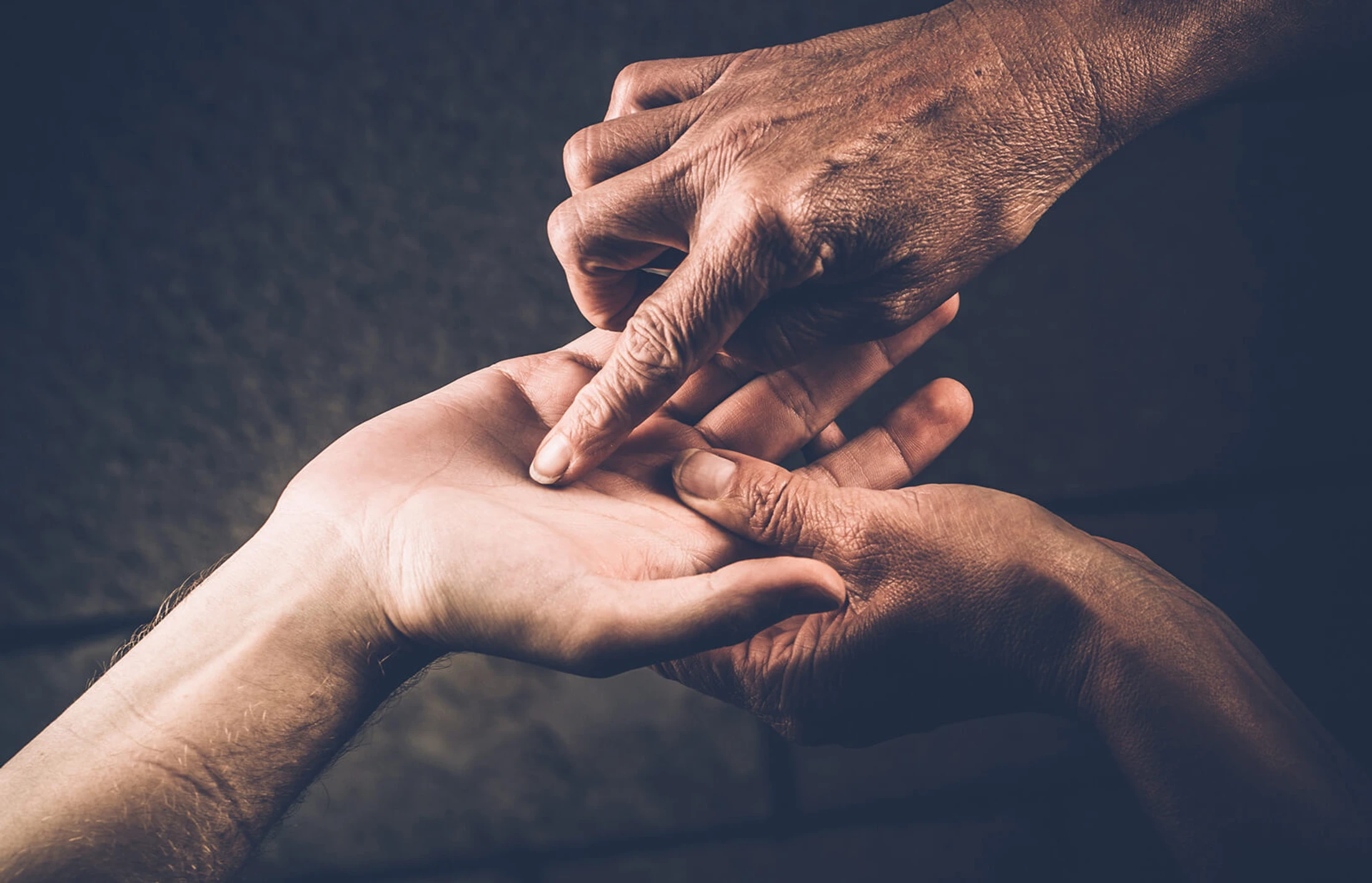
Palm reading, also known as “palmistry” or “chiromancy,” has its roots in Greek mythology. Chiromancy derives from the Greek kheiro, meaning “hand,” and mantia, meaning “divination”—translation, “divination from the palm of the hand.” Practitioners believe they can interpret one’s character, fortunes, and possible future events by reading the lines, marks, and bumps on the palm of a person’s hand.
According to one of the popular psychic reading stores in Sedona, they will perform this ancient practice for you for fifteen minutes for only $50. Or, you can get them to read your palm for half an hour for only $90. According to their website, Green Witch Creations explains that “Palm reading is an ancient art that was very precious to the Babylonians, and it took a history of piousness, wisdom, and study to be able to successfully achieve the level of wisdom required to be a palm reader. . . . The idea was that gods and stars; heavenly bodies and sacred bodies, together determined a palm reading.”
Do you know anything about Babylon? This city, located in modern-day Iraq, was a powerful city in Bible times, but biblical writers consistently use Babylon as a symbol of evil and defiance against the one true God. The Babylonians were polytheists; they believed that there were many gods that ruled different parts of the universe, and they participated in many detestable practices in worship to their gods. So, it’s quite telling that palmists today speak of palm reading being “very precious to the Babylonians.”
If you were to visit Green Witch Creations, they would educate you on four main lines on your palm: the Life Line (which corresponds to your physical health and mental vitality); the Head Line (dealing with intellectual faculties such as creativity, logic, and knowledge); the Heart Line (your love life and emotions); and the Fate/Destiny Line (how well someone controls their life). According to this shop, your hand shape can also reveal pertinent information about your lifestyle, relationships, and work.
Standing Out as Different
Although palm reading is not specifically mentioned in the Bible, divination is, and it was forbidden in the Mosaic Law. Moses warned the children of Israel before entering the Promised Land, “Do not practice divination or seek omens” (Leviticus 19:26, NIV). In Leviticus 20:6, God declared, “I will set my face against anyone who turns to mediums and spiritists to prostitute themselves by following them, and I will cut them off from their people” (NIV). Divination was also condemned in several places by God’s prophets. Why such warnings? Because occult practices were very common among the pagan nations whose lands would be surrounding the Israelites as they inherited the Promised Land. God was telling them, “Don’t be like them! Don’t pattern your behaviors after them. You are to be a people separated for me, and you are to stand out as different!”
As we approach what is traditionally celebrated as “Palm Sunday,” or as some refer to it, “Passion Sunday,” can I ask you a question today:
Do you put your faith in man-made predictions or in the Lord of the Palms?
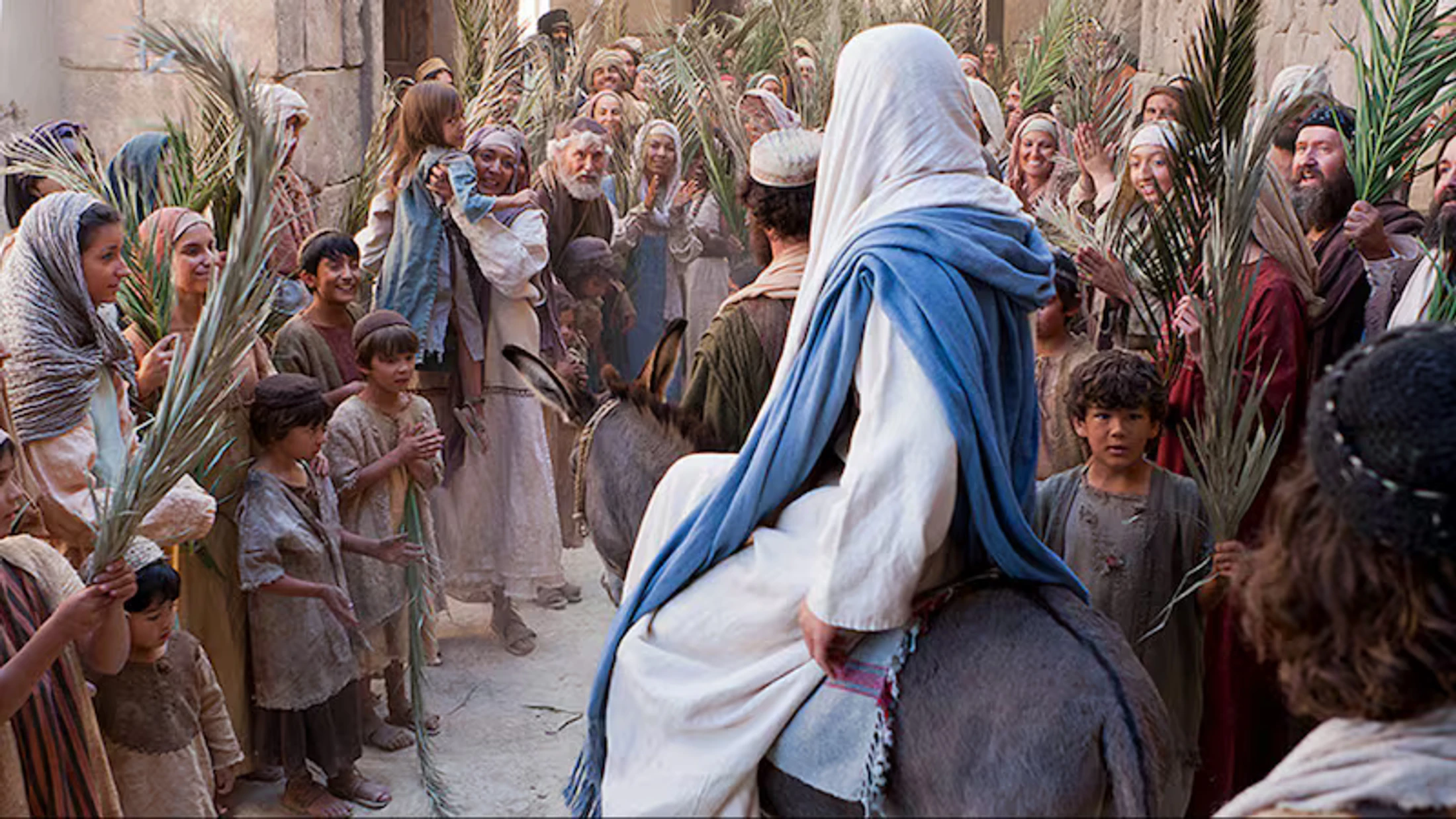
God has also called his followers today to stand out as different from others who may put their faith in palm readings, horoscopes, or various other means for determining future decisions. When we look at the humble and meek One whom we celebrate on Palm Sunday, we see a King who is worth banking our future plans on. Palm Sunday commemorates Jesus’ triumphal entry into the city of Jerusalem during the last week of his earthly life. It is known as “Palm” Sunday because when Jesus came riding on a colt, the foal of a donkey, into the city, “A very large crowd spread their cloaks on the road, while others cut branches from the trees and spread them on the road” (Matthew 21:8, NIV). The apostle John lets us specifically know that the branches were from palm trees (John 12:13).
Celebrating the King
The date of the first observance of Palm Sunday in churches is uncertain. A detailed description of a palm processional celebration was recorded as early as the fourth century in Jerusalem. The ceremony was not introduced into the West until much later in the ninth century. I grew up in a church where I remember coming home with palm branches in my hands every year on the Sunday before Easter. Some churches celebrate this special day by making crosses out of palm fronds.
While this was Jesus’ triumphal entry into the Holy City, it was also his first step in that final week that would culminate in his death on the cross for you and me. In biblical times, it was common for important people to arrive by a procession while riding a donkey. The donkey symbolized peace, so how appropriate it was for our Prince of Peace to fulfill the prophecy we find in Zechariah 9:9, “Look, your king is coming to you. He is righteous and victorious, yet he is humble, riding on a donkey—riding on a donkey’s colt” (NLT).
On that eventful day when Jesus rode into Jerusalem, the crowd shouted, “Hosanna!” which literally means, “save us now!” They were hailing him as Christ the King. This coming Sunday we will join together with followers of Jesus and proclaim with the Psalmist (not the palmists), as the crowd did on that day, “Bless the one who comes in the name of the Lord. We bless you from the house of the Lord” (Psalm 118:26, NLT).

The Bible says that the one we gather to worship this Sunday loves his people so much that he has “engraved you on the palms of my hands” (Isaiah 49:16, ESV). Wow! God doesn’t want you seeking a palm reader for direction in your life, he wants you to entrust yourself into the hands of the One who knit you together in your mother’s womb—and fashioned your palms for the express purpose of glorifying him.